


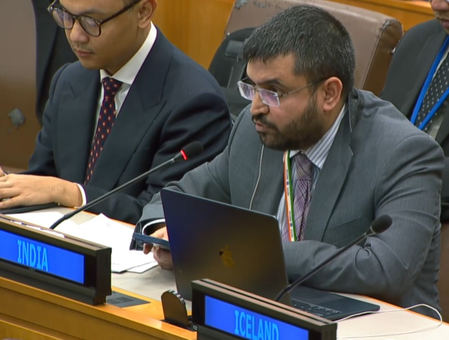
India, a victim of recent terrorism in Pahalgam, has committed to backing the UN’s counter-terrorism strategy globally. Emphasizing the significance of the Global Counter Terrorism Strategy (GCTS), Raghoo Puri from India’s UN Mission highlighted terrorism as a threat to international peace and security that requires collective action. The GCTS, established in 2006 for combating terrorism jointly, is set for review in July, marking its 20th year.
India, having suffered from cross-border terrorism for decades, will actively participate in the upcoming 9th review of the GCTS. Referring to a recent attack by The Resistance Front, a proxy of LeT, Puri stressed the need for united action against groups like ISIS and Al Qaeda. During its previous tenure on the Security Council, India worked to integrate key principles into the UN’s counter-terrorism framework, including promoting the Delhi Declaration unanimously adopted by the Counter-Terrorism Committee.
Acting under-secretary-general for counter-terrorism, Alexandre Zouev, cautioned about the evolving tactics of terrorists, who are increasingly using advanced technologies like drones, artificial intelligence, and online fundraising. The complexity and scope of the threat have grown as terrorists exploit technological advancements, making monitoring and addressing their activities more challenging.
