


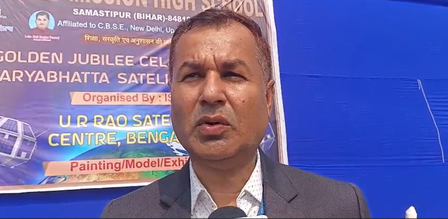
India is swiftly moving forward in establishing its own space station and advancing the Gaganyaan human spaceflight mission, as stated by ISRO Programme Director Imtiyaz Ahmed. Nearly 80 satellites are currently in progress, set to contribute significantly to scientific research, disaster management, security, navigation, and transmitting crucial signals for the Gaganyaan mission. Speaking in Samastipur on the 50th anniversary of India’s first indigenous satellite, Aryabhata, Ahmed emphasized the importance of such endeavors in enhancing India’s space capabilities and technological independence.
ISRO is actively involved in various key projects, including Earth Observation missions, Navigation with Indian Constellation (NVS), the Indian Data Relay Satellite System (IDRSS), Gaganyaan, and the Venus Orbiter Mission. These ventures collectively showcase India’s expanding presence in space science, exploration, and applied technologies. Reflecting on the historic launch of Aryabhata in 1975, Ahmed highlighted how this satellite, named after the renowned Indian mathematician and astronomer, marked a significant milestone in India’s scientific voyage. Despite challenges during the Cold War era, Aryabhata’s success laid the groundwork for future space missions, positioning ISRO as a globally esteemed space agency.
In celebration of Aryabhata’s golden jubilee, ISRO has initiated a nationwide outreach program for school students. The inaugural event in Bihar, held at Holy Mission High School in Samastipur, saw participation from students of five different 10+2 schools. During the program, students were acquainted with ISRO’s activities and potential career prospects in the space sector. Scientists shared their journeys, highlighting that many of them hailed from Hindi-medium educational backgrounds, encouraging students to aim high and pursue careers in space science and technology.
