


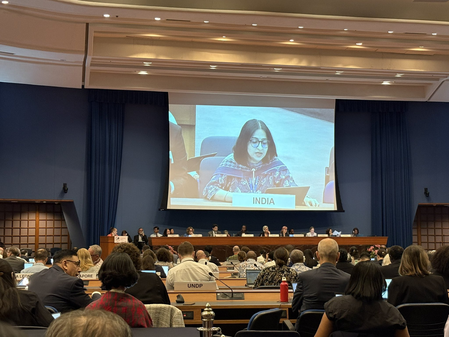
Jagpreet Kaur, First Secretary of the Embassy of India in Bangkok, emphasized India’s dedication to upholding the Montreal Protocol during the 48th meeting of the Open-Ended Working Group (OEWG48) in Bangkok. The meeting, taking place from July 13 to 17, 2026, saw active Indian participation. Kaur addressed various agenda items, underscoring India’s ongoing support for the Protocol and the challenges faced by Article 5 countries.
India stressed the importance of a comprehensive approach that extends beyond mere compliance to ensure the sustainable phase-out of Hydrochlorofluorocarbons (HCFCs) and the phase-down of Hydrofluorocarbons (HFCs). The Embassy of India in Thailand highlighted the critical role of long-term strategies in this process. The Montreal Protocol, a pivotal international environmental agreement, governs the production and consumption of around 100 man-made chemicals known as Ozone-Depleting Substances (ODS).
This landmark Protocol, adopted on September 16, 1987, stands as one of the few treaties with universal ratification. The United Nations Environment Programme outlines the Protocol’s phased reduction of ODS consumption and production, with distinct timelines for developed and developing nations, the latter referred to as “Article 5 countries.” All signatories bear specific responsibilities concerning the phase-out of various ODS groups, ODS trade control, annual data reporting, and national licensing systems for ODS imports and exports.
Both developed and developing countries hold equal but distinct responsibilities under the treaty, featuring binding, time-bound, and measurable commitments for all parties involved.
