


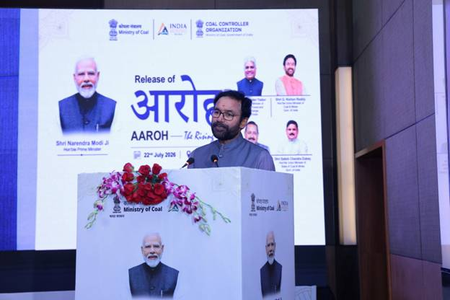
India has redefined the concept of mine closure, considering it not as the end of mining but as a new beginning for opportunities in people, communities, and sustainable growth. Union Minister of Coal and Mines, G Kishan Reddy, emphasized the importance of scientific mine closure as a national priority under the vision of Viksit Bharat 2047. The country has already closed 42 coal mines, with 33 closures in the past year alone, and aims to close 147 more mines in the next two to three years.
The Ministry has established a comprehensive ecosystem for mine closure through initiatives like the RECLAIM Framework, the SUVIKALP digital platform, the ARTHA Framework, and District Collector-led Mine Closure Advisory Committees. The focus of the Mine Closure Guidelines, 2025 is on placing people and sustainability at the core of mine closure efforts. Additionally, 25% of the approved mine closure cost will now be allocated for community development, presenting an investment potential of nearly Rs 10,000 crore over the next decade.
In a significant move, the government has allocated over $5 billion (approximately Rs 40,000 crore) for scientific mine closure and progressive mine closure. This allocation reflects the government’s commitment to environmentally responsible mining, ecological restoration, and the socio-economic advancement of mining-affected regions. Reclaimed mine lands in various parts of the country are being repurposed for renewable energy, eco-tourism, water conservation, agriculture, community infrastructure, and sustainable livelihood generation.
Union Minister Dr. Jitendra Singh commended the Ministry of Coal for its forward-looking policies on scientific mine closure. He highlighted the successful closure of 42 coal mines as a testament to how degraded mine lands can be revitalized into productive assets through ecological restoration, afforestation, water conservation, renewable energy, and other sustainable community-focused initiatives.
