


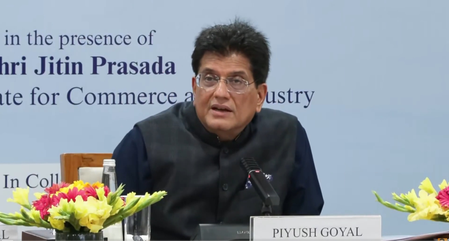
Commerce and Industry Minister Piyush Goyal announced that the interim trade deal between India and the United States is expected to kick off in April this year. A meeting lasting three days between Indian and US officials will commence on February 23 to finalize the legal text for the interim trade agreement in the US. Additionally, India’s free trade agreements with the UK and Oman are likely to be enforced in April, while the trade pact with New Zealand is anticipated to take effect in September.
The US and India disclosed on February 7 in a joint statement that they have established a framework for an Interim Agreement concerning reciprocal and mutually beneficial trade. This bilateral trade agreement between India and the US signifies a significant step in India’s global trade involvement, ensuring continued preferential access for Indian exports in the US market valued at over $30 trillion, as per an official statement. The agreement encompasses comprehensive tariff rationalization, zero-duty access across various product categories, enhanced digital and technology cooperation, and a meticulously designed framework to protect India’s farmers, MSMEs, and domestic industry.
With India’s total exports to the United States amounting to $86.35 billion in 2024, the agreement substantially improves competitive access across crucial sectors such as textiles, leather, gems and jewelry, agriculture, machinery, home décor, pharmaceuticals, and technology-driven industries. Tariffs on exports worth $30.94 billion have been reduced from 50 per cent to 18 per cent under the agreement, while tariffs on another $10.03 billion have been slashed from 50 per cent to zero. This development implies that a significant portion of Indian goods entering the US market will now encounter either significantly lower tariffs or completely duty-free access, thereby enhancing price competitiveness.
India’s labor-intensive textiles and apparel exports will benefit from tariff reductions from 50 per cent to 18 per cent, with silk securing zero per cent duty access in a $113 billion US market for these goods. Machinery exports will see tariffs lowered to 18 per cent, creating opportunities in a $477 billion US market, as mentioned in the statement. The agreement also presents substantial advantages for India’s leather and footwear sector, positioning the country as the preferred supplier to the US market. The enhanced market access is expected to bolster manufacturing growth and employment generation, particularly among MSMEs and production clusters.
