


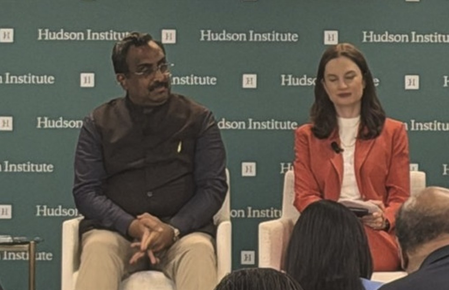
India and the United States are urged to rebuild “mutual respect, mutual sensitivity,” and align on core interests as their relationship faces challenges amidst geopolitical shocks and economic frictions. Speakers at a high-level panel emphasized the strains across strategic, economic, and people-to-people aspects, highlighting the enduring importance of their partnership. Ram Madhav from the India Foundation noted visible stress in foundational pillars like geostrategic priorities and the economic relationship, calling for recalibration anchored in mutual interest.
Elizabeth Threlkeld of the Stimson Centre observed that the past year has tested the relationship but highlighted continued cooperation in defense, energy, space, and supply chains. She mentioned economic ties and major investments by US technology firms as providing stability. Kurt Campbell, former US Deputy Secretary of State, acknowledged the relationship’s significance but expressed concerns over rising unease and the need for mutual respect. He emphasized the importance of expanding education and technology partnerships.
Speakers also discussed the impact of ongoing global conflicts on the Indian Ocean region, expressing concerns over its widening scope. They stressed the need for negotiation, dialogue, and deeper cooperation in logistics, intelligence sharing, and contingency planning. The New India Conference, held at the Hudson Institute, convened policymakers and analysts to evaluate India’s evolving global role and the future of US-India ties.
