


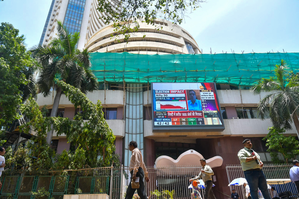
The Indian equity markets saw a decline early on Friday, mainly due to pressure on metal stocks. By 9:30 am, Sensex dropped by 525 points, or 0.64%, reaching 82,040, while Nifty fell by 159 points, or 0.63%, settling at 25,259. Notably, the Nifty Midcap 100 and Nifty Smallcap 100 indices experienced higher losses compared to the benchmark indices.
All sectoral indices, except for FMCG, pharma, and consumer durables, were in the red zone. Nifty metal and IT sectors were notably down by 4.28% and 1.41%, respectively. Market analysts mentioned that the immediate support levels are around 25,250-25,300, with resistance levels at 25,550–25,600.
Geopolitical concerns, including the threat of tariff weaponization by US President Donald Trump, continue to impact global trade. The rise in Brent crude prices to nearly $70 poses challenges for Indian macros, especially for industries reliant on oil inputs. However, the Economic Survey’s positive outlook, forecasting GDP growth of 6.8% to 7.2% in FY 27, is expected to counter these challenges.
India’s GDP growth is projected to be around 10% in FY27, with an estimated 15 to 17% earnings growth, providing resilience to the market. Analysts anticipate that India’s efforts to diversify its export markets, particularly away from the US, will gain momentum post-2027, notably with the implementation of the India-EU trade deal.
In the Asia-Pacific region, most markets traded lower following Trump’s announcement of the next head of the US Federal Reserve. Notably, China’s Shanghai and Shenzhen indices saw declines, while Japan’s Nikkei and Hong Kong’s Hang Seng Index also experienced losses. South Korea’s Kospi, however, added 0.59%.
The US markets closed mostly in the green, with Nasdaq down by 0.72%, S&P 500 easing by 0.13%, and Dow gaining 0.11%. On January 29, foreign institutional investors (FIIs) net sold equities worth Rs 394 crore, while domestic institutional investors (DIIs) were net buyers of equities worth Rs 2,634 crore.
