


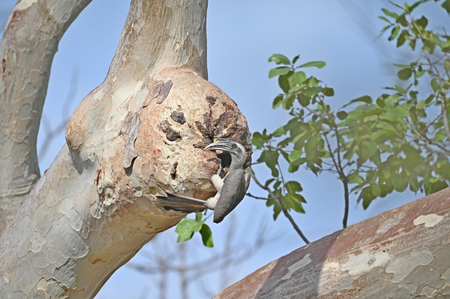
The Indian Grey Hornbill, known as the Chilotro, has returned to Gujarat’s Gir forests after nearly six decades through a state-led reintroduction program. A recent study published in the journal ‘Birds’ confirms that the birds have settled, nested, and started breeding in the wild. This marks a significant conservation success for the Forest Department’s efforts to restore the species in Gir.
The reintroduction project, initiated in 2021, involved translocating 40 hornbills from the Aravalli forests to Gir in two phases. The study reveals that multiple breeding pairs have successfully nested in Gir, indicating the program’s success in achieving its conservation goals. The birds are now resident in the forest and breeding successfully.
The successful reintroduction of the Indian Grey Hornbill is a testament to the conservation initiatives led by the Gujarat Forest Department. Forest and Environment Minister Arjun Modhwadia praised the efforts, highlighting the importance of projects like reintroducing the Chilotro and conserving the Great Indian Bustard. The project’s success demonstrates the state’s commitment to wildlife conservation.
Principal Secretary of Forest and Environment Department, Vinod Rao, emphasized the ecological significance of the Indian Grey Hornbill. The species plays a crucial role in dispersing tree seeds over long distances, aiding in the natural regeneration of forests. The reintroduction project’s success showcases the positive impact of conservation efforts on biodiversity in Gir.
Mohan Ram, Conservator of Forests, Junagadh Forest Circle, mentioned that satellite transmitters were fitted to male hornbills for monitoring their movements and breeding behavior. The birds’ successful adaptation to the Gir ecosystem after release indicates the favorable habitat conditions created for their return. The project is part of broader wildlife conservation endeavors in India, focusing on reintroducing locally extinct species in suitable habitats.
