


The fall of the Indian Mujahideen, a group of Indian operatives backed by Pakistan, in 2014 marked the end of homegrown terrorism in India. Since then, most terror incidents have been reported in Jammu and Kashmir, with involvement from Pakistani actors. Pakistan, facing international scrutiny and economic challenges, created The Resistance Front (TRF) in Jammu and Kashmir to project it as a local terror group.
The TRF, a proxy of Lashkar-e-Taiba, claimed responsibility for the Pahalgam attack, but all involved terrorists were found to be Pakistani nationals. Following the Pahalgam incident and Operation Sindoor by the Indian Armed Forces, Pakistan activated the Faridabad module post the abrogation of Article 370 to establish a new homegrown terror group operating outside Jammu and Kashmir.
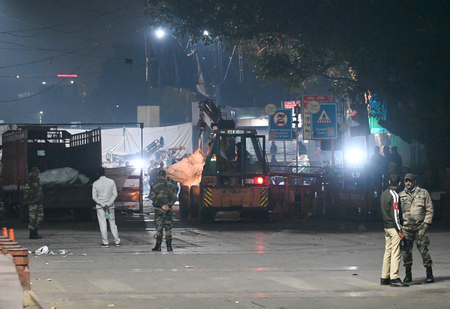
The Faridabad module, linked to Jaish-e-Mohammad (JeM), was dismantled in November 2025 after a member carried out a deadly explosion near the Red Fort in Delhi. The investigation revealed the module’s association with Al-Falah University in Faridabad and its radicalized members’ plans for multiple blasts in Delhi and nearby areas.
The module, inspired by JeM, was led by Mufti Irfan Ahmed from Jammu and Kashmir, who had ties to the ISI and concealed Pakistan links. The Jammu and Kashmir Police uncovered the module following pro-JeM posters, leading to its bust. Pakistan’s tactical shift aimed to create distractions from Jammu and Kashmir, allowing for infiltrations from launch pads in Pakistan-occupied Kashmir.
Intelligence agencies discovered Pakistan’s plan to establish more homegrown modules across India, resembling the Indian Mujahideen, to conduct periodic blasts without direct links to Pakistan. The ISI sought to keep the handlers discreet to portray the modules as indigenous and anti-Article 370, diverting security forces’ focus from Jammu and Kashmir.
The Faridabad module’s disruption in 2025 prevented potential catastrophic events, serving as a model for future homegrown modules. Pakistan’s strategy aimed to buy time for terror outfits to regroup and divert security agencies’ attention for infiltration opportunities.
