


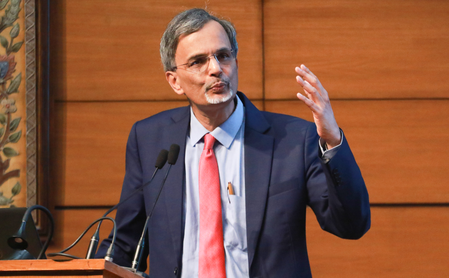
India’s Chief Economic Adviser, V. Anantha Nageswaran, believes that while India’s currency is currently facing pressure, its long-term prospects remain strong. Nageswaran described the rupee as “fundamentally undervalued,” presenting an attractive opportunity for investors. He noted that the current valuation of the rupee is favorable for long-term investors eyeing India’s growth potential.
The Indian rupee has been on a losing streak, declining for the fifth consecutive session, reaching 94.25 against the US dollar in early trade. This decline is influenced by global factors, including Brent crude prices exceeding $100 per barrel due to ongoing Middle East tensions, disrupting energy supplies and sparking inflation concerns.
Foreign investor sentiment has further weakened the rupee, with heavy outflows from Indian equities surpassing last year’s record annual outflow of $18.79 billion. In 2026, the rupee has emerged as Asia’s worst-performing currency, largely attributed to India’s heavy reliance on energy imports, leaving it susceptible to global oil price shocks amid geopolitical conflicts.
Despite these challenges, policymakers maintain a cautious optimism about India’s economic outlook. Sanjay Malhotra anticipates a growth rate of 6.9% in the current financial year, although some economists have revised their forecasts following escalating geopolitical tensions. Nageswaran also warned about the impact of rising oil prices on the global economy, emphasizing that a return to normal economic activity may take longer than expected.
