


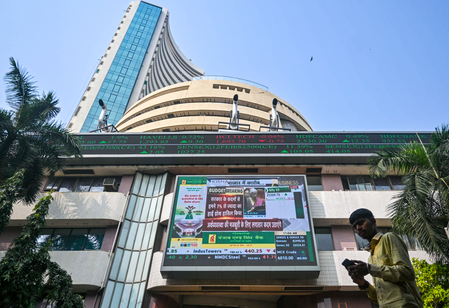
The Indian stock market faced losses this week due to continuous selling by foreign institutional investors and the surge in crude oil prices. The Nifty dropped by 0.73% over the week, closing at 23,997, while the Sensex fell by 0.75% to 76,913, with a 0.97% decline on the last trading day. Analysts attributed this cautious investor sentiment to ongoing disruptions in the Strait of Hormuz affecting global markets.
Oil prices hit a four-year high at $126 per barrel, leading to concerns about inflation and potential fuel price increases. This sharp increase in crude prices negatively impacted the Indian rupee, reigniting worries about capital outflows and trade deficits due to the country’s heavy reliance on oil imports. Sector-wise, most indices traded in the red, with Nifty Metal, PSU Banks, Realty, and FMCG sectors experiencing significant declines, while Nifty IT and Pharma sectors remained relatively stable.
Despite market volatility, early corporate earnings reports for Q4FY26 encouraged investors to maintain a positive outlook. Defensive sectors like pharmaceuticals, healthcare, telecom, and energy outperformed amidst the broad-based sell-off. Geopolitical tensions and inflationary pressures are anticipated to keep the Federal Reserve cautious through 2026, introducing uncertainty regarding interest rate trends, according to analysts.
The Nifty 50 index is projected to remain range-bound in the short term, fluctuating between 23,500 and 24,500 levels. In contrast, Bank Nifty underperformed the broader market, closing at 54,863 with a 2.56% decline for the week and a 0.98% drop on the last trading day. Analysts foresee Bank Nifty continuing consolidation within the 54,000-57,500 range, with specific stock movements during the quarterly earnings announcements in the banking sector.
