


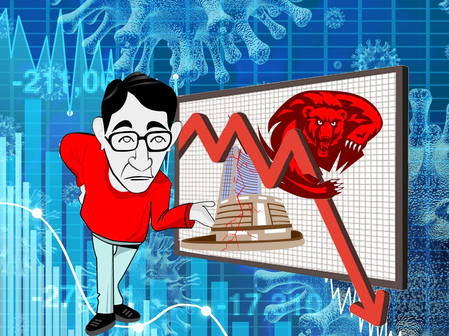
The Indian stock market experienced a significant drop on Sunday following the presentation of the ninth consecutive Union Budget by Finance Minister Nirmala Sitharaman. The Sensex plummeted over 2,300 points from its peak, while the Nifty declined by more than 600 points as investors exercised caution. Despite the Budget outlining measures to boost economic growth while upholding fiscal discipline, the market saw a sharp decline.
Markets commenced the day nearly flat, with the Sensex registering a marginal increase and the Nifty slightly lower amidst concerns related to the Budget and a weak rupee trading near 92 per dollar. Sectoral indices predominantly traded in the negative territory at the opening bell, with Nifty metal witnessing the most substantial drop of over 3%, while auto, private banks, oil and gas, and consumer durables recorded modest gains.
Among the top gainers on the Nifty was Bharat Electronics, with investors anticipating higher allocations for the defense sector in the Budget. Analysts noted that the market’s decline was a reflection of investor wariness, given the absence of significant income tax reliefs in this Budget following the substantial tax reductions announced in 2025. While minor adjustments in the tax structure and initiatives to bolster long-term growth were viewed positively, they were insufficient to prevent the initial sell-off.
Market experts highlighted potential attention towards defense-related stocks, manufacturing exports, PSU bank mergers, and disinvestment announcements. The market is anticipated to remain volatile throughout the day, with significant movements likely based on announcements concerning fiscal policy, capital expenditure, sectoral incentives, and the expected fiscal deficit target of around 4.3–4.4% of GDP for FY27.
Trading on the stock exchanges will continue until 3:30 p.m., but shares purchased on January 30 cannot be traded today due to the settlement holiday. Analysts emphasized that investors are closely monitoring debt metrics, deficit outcomes, and borrowings planned for the upcoming year to assess the government’s strategic direction.
