


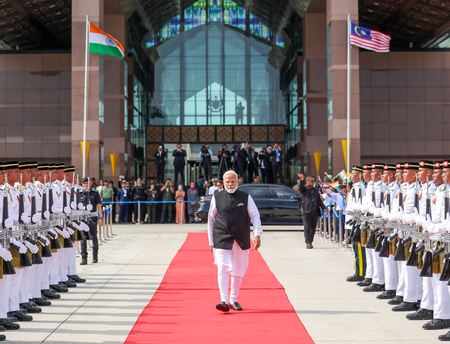
Prime Minister Narendra Modi’s Act East Policy, initiated in 2014, has strategically positioned India as a significant Indo-Pacific power with a lasting interest in Southeast Asia’s security and prosperity. A recent report underscores how Southeast Asia has benefited from India’s enhanced connectivity, deeper integration, and engagement in the region’s resilience and security support. By refocusing on ASEAN and the broader maritime region from the Andaman Sea to the Strait of Malacca, India’s policy emphasizes its strategic presence, offering assurance to a region facing renewed risks and tensions.
The report emphasizes India’s emergence as a global economic powerhouse and a crucial balancing power in the Indo-Pacific, particularly as China experiences economic deceleration and strategic tensions. It highlights India’s pivotal role in providing stability and strength to Malaysia and Southeast Asia in areas such as economic resilience, security support, food and energy security, technology access, and strategic flexibility. Prime Minister Modi’s recent visit to Malaysia is seen as strategically significant for both nations, signaling a move towards recognizing India as a key strategic partner for the future.
India’s evolving role alongside China’s slowdown is reshaping the power balance in Asia, with Malaysia facing a choice between preparing early for India’s rise or adjusting late. The report stresses the importance of deepening ties with India in various sectors like defense, technology, energy, food security, education, and culture, as a foundation for long-term prosperity, security, and autonomy for Malaysia and the region. Prime Minister Modi’s visit is viewed as a turning point in fostering strong ties based on history, trust, and shared aspirations, with mutual benefits for both nations.
