


India’s commercial drone industry reached a market size of $1.88 billion (Rs 17,000 crore) in FY26 and is projected to expand at a compounded annual growth rate of 17.98% from FY25 to FY29, as per a report. Globally, the US leads the commercial drone sector, with China following closely, while India currently holds the seventh position in the industry rankings, according to research by B2K Analytics.
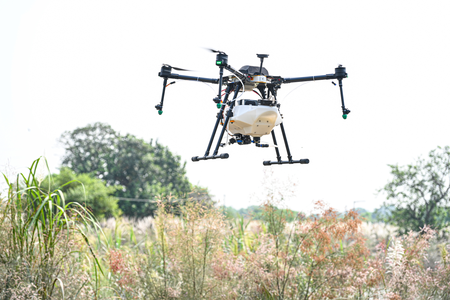
The report highlights that drones have the potential to reduce agrochemical spraying costs by almost 80% compared to manual methods. An analysis comparing small and medium-sized drones, priced between Rs 6.4–7.1 lakh and with a maximum operational life of three years, against annual manual labor costs of about Rs 1.7 lakh revealed significant cost-effectiveness of drones.
Despite the initial higher costs, drones can cover 6–6.6 acres in the time taken for manual labor to cover just one acre. Efficiency and depreciation considerations show that drones are over 78% more cost-effective than manual labor, the study found.
In India, there are currently 122 holders of the Type Certificate, which is an approval from the DGCA confirming that a drone model meets safety, airworthiness, and performance standards for commercial use. The majority, around 70%, have received certification for drones used in agriculture, particularly for agrochemical spraying, while 24% are engaged in surveillance and mapping activities, indicating agriculture as the primary drone application currently.
Government policies have been favorable to the local drone ecosystem, with measures like banning completely built drone units and introducing production-linked incentives for manufacturing and R&D. Initiatives such as the Namo Drone Didi scheme aim to empower women Self-Help Groups with drone technology for agricultural services, promoting wider adoption.
Various ministries, including Agriculture and Farmers Welfare, Mines, and Road Transport and Highways, utilize drones for monitoring purposes. The Ministry of Defence also has procurement mechanisms for remotely piloted aerial vehicles to enhance operational readiness. Moreover, approximately 90% of India falls within the green zone, where drones can operate without prior permission.
The report predicts that following states like Punjab, Haryana, and Andhra Pradesh, the adoption of drones in agriculture will expand, leading to a broader farm-based market growth.
