


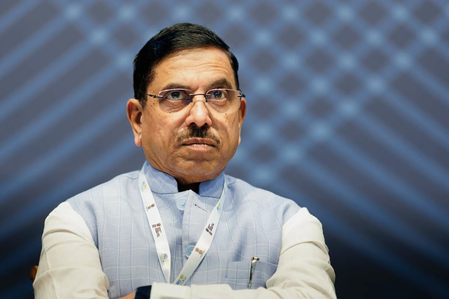
India is dedicated to accelerating the clean energy transition through stable policies, global cooperation, and long-term investments, as stated by Union Minister for New and Renewable Energy Pralhad Joshi following his participation in the World Economic Forum (WEF) Annual Meeting 2026 in Davos. Joshi emphasized that India’s engagements at WEF 2026 have bolstered global confidence in the country’s renewable energy journey and enhanced strategic partnerships with governments, investors, and industry leaders worldwide.
During the event, Joshi underscored India’s determination to advance towards clean energy growth with the support of consistent regulations, policy stability, and sustained international collaboration. He also presented India’s success story in long-term clean energy investments, emphasizing the effective coordination between the central and state governments, transparent policies, and continuous stakeholder engagement.
Furthermore, global leaders and investors at Davos expressed their trust in India’s capability to rapidly expand renewable energy while ensuring economic development and social inclusivity. Joshi highlighted India’s progress in renewable energy through people-centric programs and efficient execution, drawing strong interest from global stakeholders in India’s project pipeline and acclaimed schemes like PM-Surya Ghar and PM-KUSUM.
India’s efforts to bolster domestic manufacturing in the solar PV value chain garnered positive feedback, solidifying the nation’s position as a dependable and competitive clean energy manufacturing center. Additionally, India’s increasing export potential in green hydrogen derivatives was recognized as a crucial element in facilitating energy transitions in partner nations.
Addressing global leaders, Joshi emphasized the growing significance of artificial intelligence (AI) in the energy sector, noting its potential to enhance forecasting, minimize power losses, reduce costs, and fortify grid reliability. He also highlighted India’s transition from pilot projects to platform-based solutions through Digital Public Infrastructure for Energy, enabling widespread adoption of advanced technologies.
