


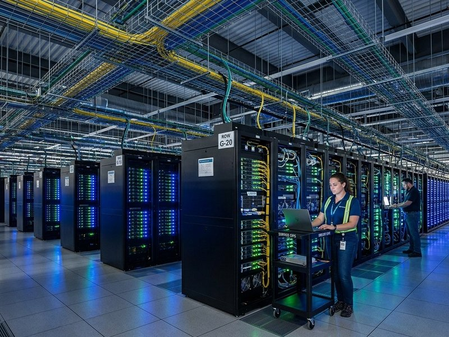
India’s data centre capacity has seen significant growth, increasing from 375 megawatts in 2020 to 1.5 gigawatts in 2025. Projections indicate a further surge to 6.5 gigawatts by 2030, marking over a fourfold rise from current levels. The country added 387 megawatts of IT capacity in 2025, a substantial 103% increase from the previous year.
In June 2025, India ranked seventh globally in terms of the number of data centres. Major cities such as Mumbai, Hyderabad, Delhi NCR, Bengaluru, and Chennai collectively housed 271 facilities, constituting nearly 65% of the total capacity. The sector’s investment pipeline stands at approximately $90 billion, a significant increase compared to the $13–15 billion invested between 2020 and 2024.
Leading tech giants like Amazon Web Services, Microsoft, and Google have been pivotal in driving the sector’s growth. The government foresees substantial investment opportunities in AI-driven digital infrastructure, estimating a potential inflow of up to $200 billion in the coming years. However, challenges related to water and power availability are emerging as critical constraints, with electricity demand projected to soar to 13.56 gigawatts by 2031–32.
States like Gujarat and Maharashtra have introduced dedicated policies to promote data centre growth beyond traditional metro hubs. The data centre industry is increasingly becoming a key indicator of India’s digital and economic progress, influencing various sectors including technology, real estate, power, finance, policy, and sustainability. Institutional investments in India’s real estate sector have notably favored data centres, accounting for 40% of investments in Q2 2026.
