


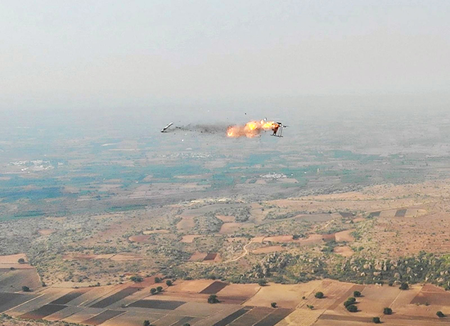
India’s drone program goes beyond defense procurement, aiming to modernize the armed forces, boost domestic industry, reduce reliance on foreign sources, and prepare for 21st-century warfare. This strategic effort, highlighted in a report by Athens-based ‘Directus,’ emphasizes domestic production over foreign acquisitions, aligning with Prime Minister Narendra Modi’s ‘Atmanirbhar Bharat’ vision for self-reliance. The goal is not just to enhance national security but also to establish a competitive domestic drone industry.
The proposed drone procurement program in India envisions a wide range of unmanned capabilities spanning various operational areas. These capabilities include reconnaissance and surveillance drones, logistics and supply drones, loitering munitions, armed strike platforms, and tactical battlefield support systems. Together, these systems aim to provide continuous surveillance, swift battlefield awareness, and rapid-response strike capabilities.
India’s indigenous drone expansion is set to complement the acquisition of 31 MQ-9B Predator drones from the United States. While the American-made drones will offer long-range surveillance and strategic strike capabilities, domestically produced drones will focus on tactical support, reconnaissance, and rapid-response functions. This dual initiative is designed to create a comprehensive surveillance and combat network from the Himalayas to the Indian Ocean, enhancing India’s threat monitoring and response capabilities.
The report underscores that India’s drone strategy anticipates a future where warfare relies on autonomous systems, artificial intelligence, electronic warfare, and rapid decision-making. By positioning itself as a key player in military drone operations and unmanned systems production, India aims to stay competitive in the global technological race.
