


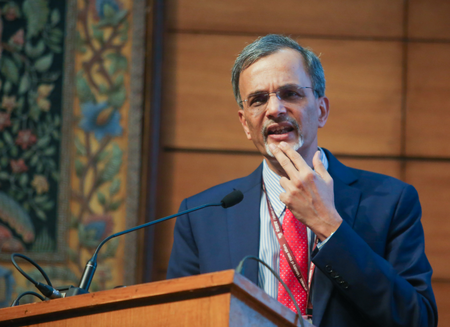
India’s Chief Economic Adviser, V. Anantha Nageswaran, stated that India’s economy is expected to sustain growth above seven percent in the near future, despite geopolitical tensions in West Asia posing risks to the macroeconomic outlook. He highlighted that the ongoing conflict coincides with anticipated strong growth, with the government closely monitoring crude oil supply dynamics.
Nageswaran emphasized that India’s dependence on imported crude should not be seen as a vulnerability alone, as alternative energy sources also present cost-related challenges. However, he cautioned about potential pressures on the external sector, mentioning that increased import costs and a slowdown in remittance inflows could lead to a higher current account deficit (CAD).
The Chief Economic Adviser suggested that the CAD might expand to around two percent of GDP in FY27 from below one percent in FY26. Despite these challenges, he reassured that India remains an attractive investment destination for global investors, with expected foreign direct investment (FDI) inflows of $90-95 billion in FY26, and continued momentum in the subsequent year as the manufacturing sector strengthens.
In terms of inflation, Nageswaran pointed out a gradual decrease in the share of food in the consumer price index basket, although short-term risks persist due to weather conditions and input cost pass-through concerns. He also acknowledged advancements in easing regulatory frameworks, highlighting states’ significant progress in deregulation efforts across various sectors.
While corporate profitability has seen substantial improvement, Nageswaran noted a lag in private investment growth compared to earnings, indicating a disparity between earnings growth and capital formation. He further mentioned that states are actively driving deregulation initiatives across sectors, with almost 86 percent of the targeted deregulation goals across 23 areas already accomplished.
