


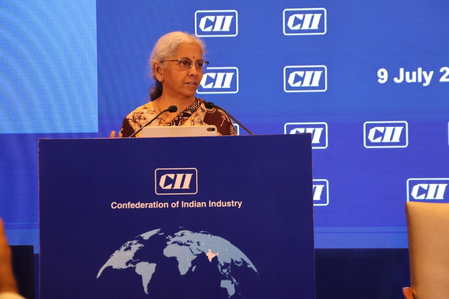
India’s Finance Minister, Nirmala Sitharaman, highlighted that the upcoming phase of global capability center (GCC) expansion in India will be more geographically diverse. She mentioned that Tier-II and Tier-III cities are set to become crucial innovation hubs. While the initial 2,000 GCCs were mainly concentrated in metropolitan areas, the future growth is expected to encompass a broader range of cities as the landscape of global value creation evolves.
Sitharaman pointed out that cities like Varanasi, Chandigarh, Visakhapatnam, Tiruchirappalli, and Mysuru could be potential sources of advancements in artificial intelligence, engineering design, and product development. She stressed the intentional selection of these locations to ensure that the next phase of GCC development is not limited to a few major cities. The Finance Minister emphasized the significant impact that a GCC’s presence can have on a city, driving the demand for advanced skills and specialized training.
The Finance Minister underscored that the establishment of GCCs in various cities leads to a ripple effect, creating opportunities for advanced skills development and specialized training. This, in turn, supports the growth of startups, professional services, urban infrastructure, and research collaborations. Sitharaman highlighted that such initiatives play a crucial role in transforming cities into dynamic innovation ecosystems and positioning GCCs as key contributors to balanced regional economic progress.
Sitharaman also acknowledged the positive response from state governments, noting their unique competitive strengths. She emphasized the importance of state-level partnerships in fostering innovation-led economic growth and creating a conducive environment for the development of GCCs across different regions in India.
