


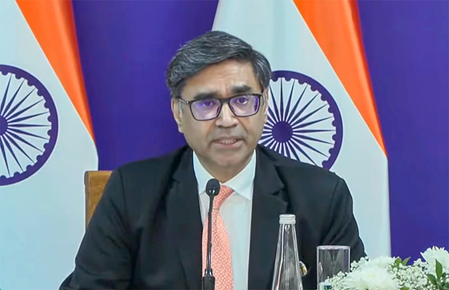
Foreign Secretary Vikram Misri highlighted that India’s energy sourcing decisions prioritize national interest, focusing on diversification and competitive pricing. Amid discussions on potentially reducing Russian oil imports post a trade agreement with the United States, Misri stressed the importance of stable and affordable energy supplies for India as a developing economy heavily reliant on imports. With 80 to 85 percent of energy needs met through imports, the government’s primary concern remains safeguarding Indian consumers by ensuring access to energy at reasonable prices and through secure supply chains.
India’s energy import policy, as outlined by Misri, revolves around meeting consumer needs effectively and economically while ensuring reliability and security in energy supplies. Emphasizing the country’s significant role in global energy markets, Misri underlined India’s commitment to promoting price stability as one of the largest energy consumers worldwide. The core principles guiding India’s energy policy include ensuring adequate availability, fair pricing, and reliable supply chains, with decisions made by oil companies based on prevailing market conditions.
Minister of Petroleum and Natural Gas Hardeep Singh Puri informed the Rajya Sabha about India’s strategic petroleum reserves capable of sustaining the country for 74 days during global supply disruptions. The Indian Strategic Petroleum Reserves Limited (ISPRL) currently holds around 4.094 million metric tonnes of crude oil, representing 77 percent of the total storage capacity. India stands as the world’s third-largest consumer of crude oil and the fourth-largest refiner, with refining capacity scaling up from 260 to 320 million metric tonnes annually.
