


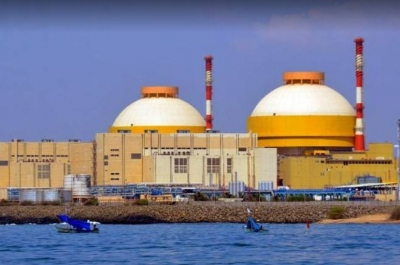
In a significant development for India’s nuclear power expansion, the Atomic Energy Regulatory Board (AERB) has approved the installation of major equipment at Units 5 and 6 of the Kudankulam Nuclear Power Plant (KKNPP). This permission allows the Nuclear Power Corporation of India Limited (NPCIL) to proceed with setting up crucial components like the reactor pressure vessel, steam generators, and coolant pumps, marking a pivotal phase in the plant’s development.
The regulatory clearance follows a thorough safety review by AERB, which scrutinized the unit designs against stringent safety standards and assessed the progress of civil construction under the earlier permission granted in April 2021 for the “First Pour of Concrete” (FPC). Officials note that this latest approval signifies the project’s adherence to safety and quality standards, paving the way for the installation of key nuclear systems.
This milestone is expected to expedite work on the twin units, integral to India’s strategy to boost nuclear power generation capacity. Units 5 and 6 at the Kudankulam facility utilize advanced VVER pressurized water reactor technology and incorporate enhanced safety features aligned with AERB’s Safety Code for Light Water Reactor-based nuclear power plants.
Situated in Tamil Nadu’s Tirunelveli district, the Kudankulam nuclear complex is a joint effort with Russia, set to accommodate six pressurized water reactor units of 1,000 MW(e) each, establishing it as a significant nuclear power center in India. While Units 1 and 2 have been operational since 2013 and 2015, respectively, supplying power to the southern grid, Units 3 and 4 are in advanced construction stages. Upon full commissioning of all six units, the project is poised to bolster India’s clean energy capacity and reduce reliance on fossil fuels.
