


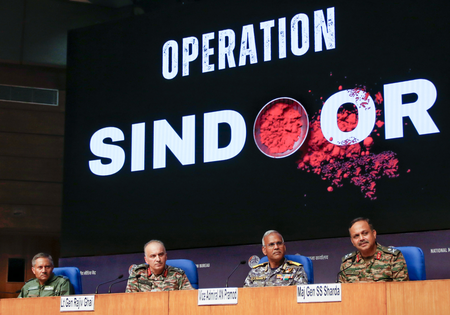
One year after Operation Sindoor, a significant military campaign by the Indian armed forces, continues to be seen as a pivotal moment in India’s security strategy. Launched in response to a terror attack, the operation involved precise strikes on high-value terror camps in Pakistan and Pakistan-occupied Kashmir. A recent report titled “One Year after Operation Sindoor: India’s doctrine of resolve” emphasized the operation’s blend of political resolve, military precision, and strategic clarity.
The report highlighted that Operation Sindoor not only reshaped perceptions of India’s stance against terrorism but also conveyed a message of readiness to act firmly for national security. It underscored the operation’s broader strategic impact on India’s security policy, emphasizing the importance of strength and foresight in maintaining peace. The military campaign was described as a combination of military precision, political determination, and strategic clarity, setting a new direction for India’s security doctrine.
Additionally, a documentary released by the Defence Ministry during the Joint Commanders’ Conference portrayed Operation Sindoor as a targeted effort to dismantle terror infrastructure across the Line of Control and inside Pakistan-occupied Jammu and Kashmir. The documentary highlighted the elimination of over 100 terrorists during the operation and emphasized the coordinated military action supported by political and strategic decision-making.
Prime Minister Narendra Modi’s strong stance on combating terrorism was evident in the documentary, where he vowed to identify and punish every terrorist and their supporters. The report also referenced Deputy Chief of Army Staff Lieutenant General Rajiv Ghai, who viewed the mission as the beginning of a sustained campaign against terrorism. Operation Sindoor, triggered by a terror attack in Pahalgam, aimed to address the persistent threat of jihadist terrorism weaponized against India.
