


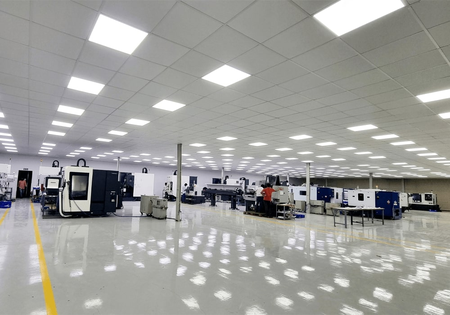
A significant development in India’s defence manufacturing sector is unfolding near Hyderabad, as Raghu Vamsi Aerospace Group inaugurates its Citadel Campus at Hardware Park. Spanning 25,000 square feet and constructed with an investment exceeding Rs 100 crore, this campus serves as a comprehensive hub for designing, manufacturing, testing, and validating defence systems. It signifies a pivotal shift towards indigenous capabilities in India’s defence industry, moving beyond mere licensed production to holistic in-house manufacturing.
The Citadel Campus bolsters Raghu Vamsi Aerospace Group’s involvement in crucial defence programs, supplementing its existing ten manufacturing facilities across three nations and a workforce of over 1,000 skilled professionals. The group, known for supplying essential aero-engine and missile subsystems to global aerospace firms and Indian defence PSUs, aims to enhance production efficiency, expand manufacturing capacity, and undertake more intricate defence projects through this new facility.
During the campus launch, Raghu Vamsi Aerospace Group introduced a series of domestically developed unmanned and autonomous defence systems, including advanced technologies like jet-powered loitering munitions, long-endurance kamikaze drones, and autonomous ground combat systems. These cutting-edge systems, tailored for modern warfare scenarios, offer capabilities such as surveillance, deep-strike missions, and battlefield logistics, showcasing India’s progress in advanced defence technologies.
The unveiled products, bearing names like RV Astra, RV Maya, RV Lakshya, and others, underscore a transition towards self-reliance in unmanned systems, demonstrating Indian firms’ competence in crafting sophisticated platforms for future combat environments. Alongside product innovation, the group also forged strategic partnerships to fortify India’s defence innovation landscape, including collaborations with the Indian Army’s 515 Army Base Workshop and Bharat Dynamics Limited for developing advanced drone platforms and indigenous engines for autonomous fighter aircraft, respectively.
