


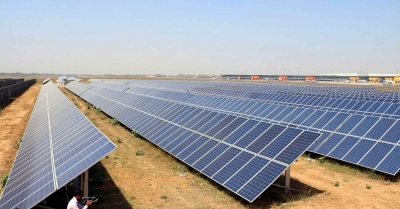
India’s installed power capacity has increased by almost 36% in the last five years, with renewable energy playing a significant role, as reported by the Reserve Bank of India. The country witnessed the highest annual addition to renewable capacity ever recorded in CY25, according to the Central Electricity Authority (CEA).
Renewable energy additions in India saw a substantial rise, going from 5.6 GW in 2020 to 14.4 GW in 2021, 16.4 GW in 2022, 13 GW in 2023, 28.6 GW in 2024, and a record 48.6 GW in 2025. Solar installations contributed significantly to this growth, the report highlighted.
In contrast, fossil fuel capacity saw modest annual additions of around 1–4 GW, while nuclear capacity showed small but consistent growth from 2023 onwards. These trends indicate a gradual transition in India’s energy mix towards cleaner sources, the data revealed.
The report also mentioned the introduction of the Sustainable Harnessing and Advancement of Nuclear Energy for Transforming India (SHANTI) Bill22, 2025, and the Nuclear Energy Mission, aiming to increase nuclear power capacity to 100 GW by 2047. It also allows for limited private participation in the nuclear energy sector under regulatory oversight.
Union Minister of New and Renewable Energy, Pralhad Joshi, emphasized the investment opportunities in India’s clean energy sector to global investors at the World Economic Forum (WEF) in Davos. Prahlad Joshi discussed India’s success in scaling solar, wind, green hydrogen, and energy storage with industry leaders, promoting long-term climate and clean energy investments in the country.
