


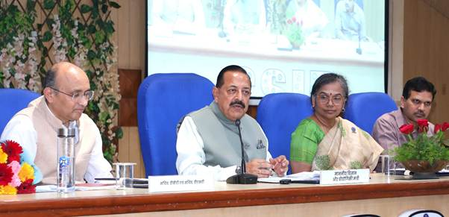
India’s Minister of State for Science & Technology, Earth Sciences, Dr. Jitendra Singh, highlighted a significant transformation in India’s science, technology, and innovation sector. The bioeconomy has surged twenty-fold to over $190 billion from around $10 billion in 2014. India aims to reach $300 billion by 2030, establishing itself as a global biotechnology hub with advancements in healthcare, genomics, diagnostics, and biopharmaceuticals supported by initiatives like the BioE3 framework.
Dr. Singh also emphasized India’s advancements in cutting-edge healthcare technologies, including breakthroughs in next-generation antibiotics, affordable CAR-T cell therapy, genomics, and precision medicine. The country is actively developing solutions for global diseases and disorders of significant impact.
Furthermore, Dr. Singh highlighted India’s achievements such as the historic Moon landing near the lunar south pole, rapid growth in the space startup ecosystem, revolutionary enhancements in weather forecasting, and the rise of indigenous technologies in strategic sectors. Science and technology have transitioned from laboratories to everyday life, becoming a crucial element in India’s developmental journey, as stated during a press conference on “12 Years of Transformative Growth in Science, Technology, and Innovation.”
Dr. Singh pointed out that public interest in scientific achievements has grown, reflecting the substantial changes witnessed over the last decade. Indigenous science technologies are integral to many government flagship programs, showcasing the success of a comprehensive government approach. The government’s focus on innovation, global competitiveness, industry involvement, and private-sector engagement has accelerated scientific progress across various sectors, from healthcare and agriculture to space, weather sciences, infrastructure, and energy.
One notable example highlighted by the minister is the steel slag road technology, which has effectively transformed industrial waste into a valuable national asset. Roads constructed using this technology have shown enhanced durability, reduced maintenance costs, and increased cost-effectiveness, leading to widespread adoption nationwide.
