


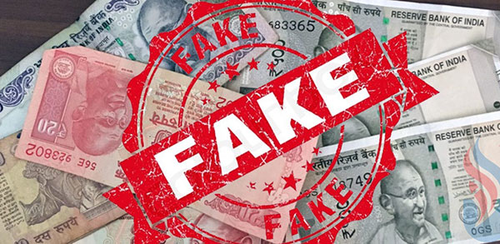
India’s security agencies have noted a surge in the number of entry points facilitating the circulation of counterfeit currency. Initially, fake currency was entering Nepal from Pakistan and then finding its way into India. However, heightened vigilance at the Nepal border prompted a shift in focus to Malda in West Bengal.
The National Investigation Agency (NIA) discovered sophisticated printing units in Malda sourcing materials from Pakistan via the Bangladesh border to produce and circulate fake notes. Intelligence Bureau officials revealed that the operation of this racket has expanded to include areas like Murshidabad and Nadia in West Bengal, along with hot spots in Coastal Andhra, Tamil Nadu, Kerala, Gujarat, Delhi, and Maharashtra.
Moreover, West Bengal serves as a primary supplier of counterfeit currency, with notes also originating from Dubai before reaching South Indian states. The network is reportedly overseen by the Dawood Ibrahim syndicate, directed by the ISI to increase production and adopt a pan-India approach in running the racket. The syndicate has diversified its operations by leveraging social media platforms for transactions, with locations like Malkapur, Pune, and Bhiwandi emerging as key trade hubs.
Officials highlighted the syndicate’s use of technology, including Artificial Intelligence (AI), to enhance the authenticity of fake notes and evade law enforcement. Material procurement from Pakistan, particularly from the Pakistan Security Printing Corporation (PSPC) in Karachi, remains a significant source. Additionally, the syndicate has started acquiring Chinese paper, posing new challenges for enforcement agencies.
The circulation and distribution of counterfeit currency align with an ISI strategy aimed at undermining India’s economy. The syndicate’s expansion efforts extend to regions like West Godavari and East Godavari in Andhra Pradesh, serving as major hubs for distributing fake currency specifically in southern states. By establishing region-specific circulation points, the syndicate aims to minimize detection risks by keeping transportation routes shorter and limiting inter-regional interactions.
