


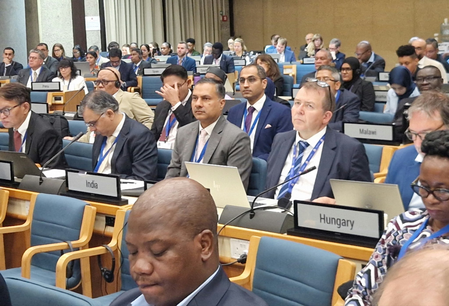
India’s Permanent Representative to the United Nations Environment Programme (UNEP), Adarsh Swaika, headed the country’s delegation at the Informal Heads of Delegations (HODs) meeting in Nairobi before the next Intergovernmental Negotiating Committee session on plastic pollution. The Indian delegation, led by Swaika, emphasized key principles and India’s commitment to a balanced outcome. Decisions were stressed to be made by consensus for collective ownership, focusing solely on plastic pollution in line with UNEA resolution 5/14, and avoiding overlaps with other frameworks.
Swaika, who also serves as India’s High Commissioner to Kenya, highlighted the importance of a member-driven process and suggested refraining from capping or regulating primary polymer production to protect the right to development. He emphasized the need for country-driven implementation, considering national circumstances and guided by Rio principles, including common but differentiated responsibilities. The Indian High Commission underscored the criticality of providing means of implementation to developing nations, advocating for a dedicated multilateral fund and an inclusive process reflective of national circumstances and capabilities.
Prime Minister Narendra Modi recently addressed climate justice concerns during his visit to Seychelles, emphasizing fairness and equity in climate action. PM Modi highlighted the disproportionate impact of climate change on the Global South and island nations, stressing the need for climate justice guided by fairness, responsibility, and equity. India’s proactive role in renewable energy expansion and sustainability initiatives, such as the International Solar Alliance (ISA) and the Coalition for Disaster-Resilient Infrastructure (CDRI), were also noted by PM Modi.
