


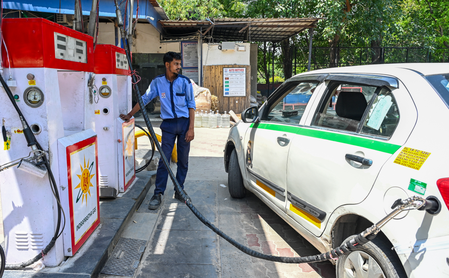
Amid the West Asia crisis that triggered global economic instability due to soaring oil and gas prices following the US-Iran conflict starting on February 28, India made a distinctive decision. Unlike other nations, India opted to bear the financial burden at the state and public sector marketing company levels rather than passing it on to households. This approach stood out notably compared to import-dependent economies that faced price pressures leading to shortages.
Sri Lanka, still recovering from its 2022 crisis, swiftly reintroduced mandatory petrol rationing and shifted the public sector to a four-day workweek. In contrast, Pakistan implemented measures like school closures, shortened workweeks, and hosting cricket matches behind closed doors to reduce traffic congestion. Myanmar adopted odd-even driving rules alongside QR-code rationing, while Bangladesh deployed troops to guard its oil depots.
While wealthier importers tapped into reserves and budgets to avoid rationing, Japan depleted its strategic stock and subsidized fuel prices. South Korea imposed price caps for the first time in three decades, and many European Union members collectively spent over nine billion euros on relief efforts by mid-April. Even oil-producing nations faced challenges, with the UAE witnessing a significant diesel price hike and Nigerian citizens feeling the impact of increased transport costs.
In countries where market forces dictated, the surge in fuel prices was steep. For instance, diesel prices spiked by about 80% in New Zealand, petrol prices rose by a fifth in the UK, and California saw prices exceeding five dollars per gallon. The International Energy Agency’s unprecedented release of reserves, equivalent to about four days of global demand, underscored the severity of the supply crisis.
India’s response, however, was distinct. The country refrained from declaring an emergency, implementing household rationing, or imposing restrictions on daily activities. Instead, India focused on safeguarding domestic needs by regulating commercial and bulk LPG distribution and restricting diesel and aviation fuel exports. This strategy aimed at securing domestic supplies rather than imposing consumer-level restrictions, resulting in minimal impact on retail fuel prices.
India’s proactive measures paid off, as it was among the first to ease restrictions, lifting commercial and bulk LPG constraints by June 25. This strategic response highlighted the benefits of a decade-long investment in energy security and the practical application of strategic autonomy, as noted by the Petroleum Ministry.
