


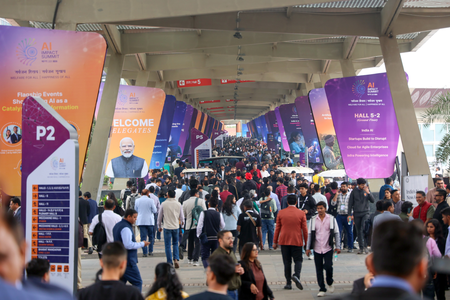
AI is not intended to replace clinicians but rather to provide them with more time for critical thinking, connection, and care, as highlighted by industry experts. Philips CEO Roy Jakobs sees healthcare as a sector where AI can have a significant human impact. At the AI Impact Summit, it was noted how AI is already alleviating strain on overwhelmed systems, with a focus on improving lives in the long run.
Meta’s Chief AI Officer, Alexander Wang, discussed AI’s increasing integration into daily life and India’s pivotal role in shaping its future. Wang outlined the company’s vision for “personal superintelligence,” aiming for AI that understands individuals’ needs and assists them in their endeavors. He stressed the importance of responsible AI deployment, emphasizing trust, transparency, and governance as essential components.
Kyndryl’s Chairman and CEO, Martin Schroeter, acknowledged the tangible innovation in AI but highlighted the necessity for readiness. He pointed out that AI is not yet fully industrialized, requiring preparedness in infrastructure, data, operations, and workforce to effectively support it at scale. Schroeter emphasized the critical role of trust and governance in determining AI’s future integration into societal systems.
Schneider Electric’s Global CEO, Olivier Blum, underlined the intricate connection between AI and the global energy transition. Blum noted that AI’s increased computational demands will impact global energy systems significantly, while also recognizing its potential to enhance efficiency. The discussion highlighted the need for balancing AI’s transformative capabilities with the energy challenges it poses.
