


Informal employment prevails as the primary form of work in all Indian states, as per a recent SBI Research report. Female workers are 4.8% more likely than males to be engaged in informal jobs, while the construction sector shows a 4.5% higher tendency towards informal employment compared to agriculture.
The report emphasizes the role of government training in enhancing self-employment opportunities, noting a 5.8% increase in self-employment probability linked to government funding. Punjab leads with 82% of its workforce in informal jobs, followed closely by Uttar Pradesh and Bihar, each at 81%.
States like Rajasthan, Chhattisgarh, Andhra Pradesh, and Madhya Pradesh exhibit significant levels of informal employment, with approximately 74% of workers involved in informal sectors. On the other hand, regions like Haryana, Tamil Nadu, Telangana, and Karnataka, with diversified industrial and service activities, display lower rates of informal employment.
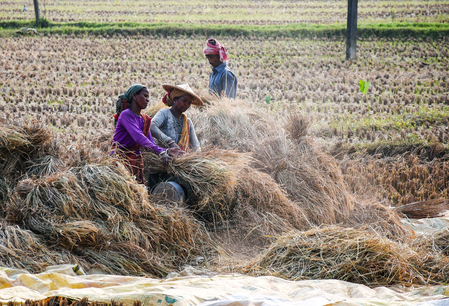
The majority of informal workers in India are rural-based, with around 59% located in rural areas and the remaining 41% in urban regions. Agriculture stands out as the primary sector for informal employment, employing nearly 42% of the informal workforce, followed by trade and hotels at 17%, and other service activities at 14%.
India’s labor force is undergoing a transformation, with the agricultural workforce share declining from 66% in 1987-88 to 43% in 2023-24. Notably, large enterprises employing over 20 workers now constitute 13.7% of the workforce, reflecting a significant increase from 10.8% in 2024 due to the government’s focus on manufacturing.
