


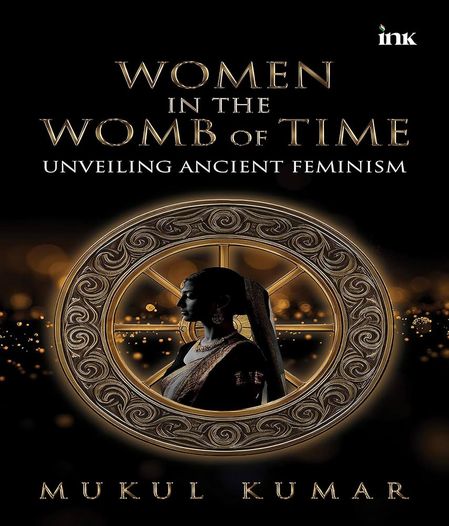
The concept of femininity goes beyond religious motifs, playing a crucial role in creation through gestation and nurturing. Despite being integral to life, the social structure often fails to reflect the importance of women, influenced by historical patriarchal norms. Civil servant Mukul Kumar delves into the roots of discrimination against women in his book “Women in the Womb of Time: Unveiling Ancient Feminism.”
Kumar meticulously examines ancient texts to uncover insights into the status of women in early societies. His research sheds light on surprising revelations challenging conventional beliefs. By exploring philosophical and historical dimensions, Kumar redefines traditional notions of femininity and masculinity, setting the stage for a comprehensive analysis of gender roles and feminism.
Starting with ancient Indian literature like the Vedas and epics, Kumar highlights the presence of notable female figures often overlooked in historical narratives. His study extends to texts like the Manusmriti, Arthashastra, and Kamasutra, each offering unique perspectives on women’s roles in society. Kumar’s exploration spans diverse traditions, including Buddhism and Jainism, culminating in reflections on early Indian civilization and its relevance to contemporary feminist discourse.
Kumar’s work, enriched by insights from various experts, presents a nuanced view of ancient Indian society and its treatment of women. Through a blend of scholarly analysis and accessible narrative, he invites readers to reevaluate historical perspectives on gender and feminism, emphasizing the importance of indigenous cultural heritage in shaping feminist discourse.
