


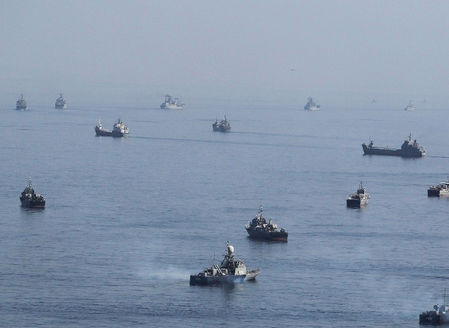
Naval forces from Iran and Russia recently collaborated in a joint exercise in the Gulf of Oman and the northern Indian Ocean. The operation involved special teams from Iran’s army, the Islamic Revolution Guards Corps (IRGC), and Russia, aiming to free a hijacked ship. Iran’s Alvand destroyer, missile-launching warships, helicopters, landing craft, special operation teams, and combat speedboats were part of the drill.
The exercise occurred following an IRGC drill in the Strait of Hormuz, which included a temporary closure of the strategic waterway. Amidst these events, US President Donald Trump mentioned that Iran has a limited timeframe to reach a deal regarding its nuclear program. Trump emphasized the urgency, stating that failure to reach an agreement could lead to severe consequences.
The US has recently reinforced its military presence in the Middle East, with the deployment of the USS Gerald R. Ford alongside existing naval assets in the region. Reports suggest that the US military is prepared to potentially strike Iran in the near future. Tensions have escalated further with discussions of a military strike on Iran’s nuclear and missile programs, posing a significant threat to Tehran’s leadership.
Iran and the United States engaged in indirect nuclear talks in Geneva, with both sides acknowledging progress but highlighting the need for further discussions. Despite the escalating situation, White House Press Secretary Karoline Leavitt emphasized diplomacy as the primary approach. In light of the circumstances, Polish Prime Minister Donald Tusk advised Polish citizens in Iran to evacuate immediately due to the heightened risk of a potential conflict.
