


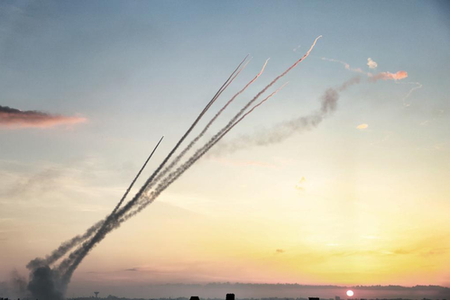
Iran launched multiple missile attacks on Israel on Sunday evening, the first such strikes since a ceasefire in April. The missiles set off alarms in northern Israel, but there were no immediate reports of injuries or damage. Iran’s Islamic Revolution Guard Corps targeted Israel’s Ramat David Airbase with ballistic missiles in response to alleged Israeli actions in Lebanon.
In a statement, Iran warned Israel of more severe consequences if it expands attacks on Lebanon or responds to Iran’s actions. The Iranian armed forces claimed they targeted Israeli sites within their right to self-defense following what they termed as Israel’s repeated aggressive actions against Lebanon and Iran. Israel Defense Forces expressed readiness for potential further missile attacks from Iran.
Israel responded by tightening civil defense measures, restricting gatherings and closing certain areas. Crossings into Gaza were also shut down after the Iranian missile strikes. Iran’s Foreign Minister discussed regional developments with counterparts from Britain, France, Türkiye, and Qatar, focusing on Israel’s alleged violations of the Lebanon ceasefire.
The tensions escalated after Israel conducted airstrikes in Beirut, resulting in casualties. Jordan reported airspace violations by missiles, while Iraqi militia threatened US bases if America strikes Iran. Yemen’s Houthi group supported Iran’s actions. Iraq and Syria closed their airspace temporarily, and Iran suspended flights at Imam Khomeini International Airport.
US President Trump intervened, urging Israel not to retaliate to prevent ceasefire negotiations with Iran from collapsing. The conflict stems from a military campaign initiated by the US and Israel against Iran in February, leading to the recent ceasefire agreement. Despite the ceasefire, regional tensions persist, with Israel vowing to intensify operations against Iran-backed groups in Lebanon.
