


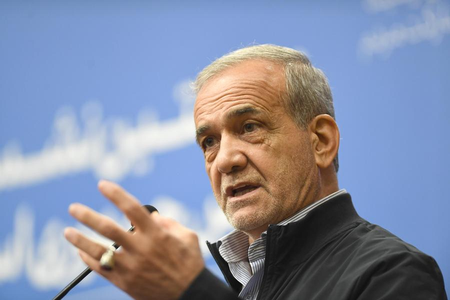
Iranian President Masoud Pezeshkian highlighted his country’s focus on protecting national interests and exercising caution in talks with the United States. He mentioned instances of US breaches of commitments, attacks on Iran during negotiations, and targeted killings of Iranian officials, leading to widespread public mistrust. Pezeshkian stated that Iran engages in negotiations based on friendly relations with other nations but prioritizes safeguarding Iranian interests above all else.
In emphasizing the importance of protecting the legal and legitimate rights of the Iranian people, Pezeshkian stressed the need for extreme caution based on Iran’s historical experiences in dealing with the United States. He expressed that war is detrimental to all parties involved and would result in losses for both the region and the world. Pakistan’s Army Chief Asim Munir, during his visit to Tehran, reaffirmed his commitment to regional stability and expressed optimism about the ongoing negotiations benefiting Iran and neighboring states.
Additionally, Iran’s semi-official Fars news agency reported that the success of peace talks with Washington hinges on the latter’s flexibility. The report highlighted Iran’s stance on key issues, including the exclusion of nuclear program discussions at this stage, the release of frozen assets before negotiations, and Iran’s continued control over the Strait of Hormuz. The agency noted that unresolved disagreements on three critical issues could impede further negotiations between Iran and the US.
The ceasefire reached on April 8 between Iran, the United States, and Israel marked the end of a 40-day conflict initiated by US and Israeli attacks on Iran. Subsequent peace talks held in Islamabad in April failed to produce an agreement, despite both sides exchanging proposed plans to end the conflict.
