


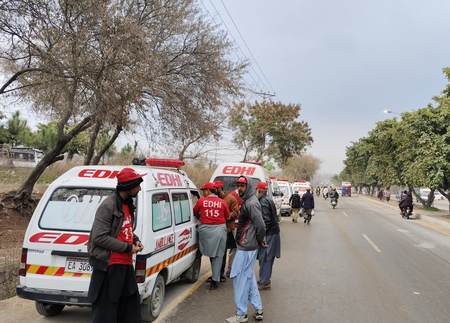
The recent suicide bombing by the Islamic State Khorosan Province (ISKP) at a Shia mosque in Islamabad resulted in 36 deaths and over 160 injuries during Friday prayers on February 6. This incident highlights the potential emergence of a new militant front in Pakistan, breaching heavily guarded zones and posing risks of reigniting sectarian tensions.
According to an Islamabad-based journalist and analyst, the ISKP, despite facing losses, continues to carry out sporadic and unpredictable attacks in Pakistan and other countries. The group, linked to the Islamic State in Iraq and Levant (ISIL), has a history of anti-Shia ideology and has expanded its targets beyond regional borders.
The ISKP’s propaganda emphasizes anti-Shia sentiments and violence, along with rivalries with other groups like the Taliban-led Afghan government and Hamas. The recent attack in Islamabad triggered speculations on motives, with some linking it to political events like protests against election rigging or the Basant festival in Lahore, reinstated after a long ban.
Non-state actors like the ISKP engage in multifaceted operations aiming not only at physical harm but also at achieving political and propaganda goals. These attacks involve extensive planning, including intelligence gathering, training, and logistical arrangements. Despite limited resources, the group’s attacks are strategically timed, often coinciding with significant events.
In recent years, the ISKP has evolved its tactics, focusing on ideological indoctrination and digital recruitment methods. While Western nations have been successful in monitoring and thwarting the group’s online activities, countries like Pakistan and Afghanistan lack the resources to effectively counter the ISKP’s digital presence, leading to successful attacks despite setbacks.
