


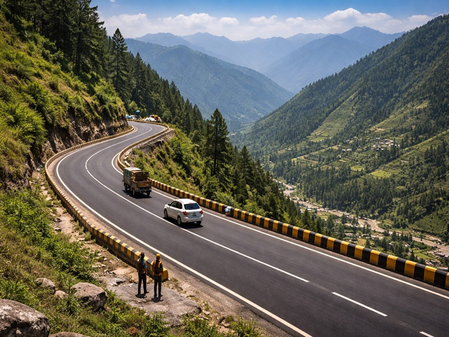
Jammu and Kashmir is making significant strides in road connectivity, boasting a total road network of 41,141 km. This expansion is fueled by major connectivity projects, particularly in remote border areas like Rajouri, Poonch, Bandipora, and Kupwara, among others.
The primary aim of these projects is to establish all-weather connectivity, reduce travel time, and boost economic activities in these border regions. In the Rajouri-Poonch districts, the Border Roads Organisation (BRO) is constructing the Bahri Pattan-Jhallas road, a crucial border route spanning around 213 km, enhancing internal connectivity and facilitating safer and quicker movement for civilians, tourists, and security forces.
This initiative is pivotal in fortifying infrastructure in forward areas along the Line of Control (LoC). The BRO is linking significant religious and tourist spots like Baba Betamshah, Mangla Mata Temple, and Pir Shahlakh Dargah with Poonch to promote border and rural tourism, thereby creating employment opportunities and easing access to healthcare services in previously isolated regions.
Improved road connectivity is transforming the lives of residents by providing easier access to employment opportunities and facilitating swift transportation of patients and injured individuals during emergencies. Villages once deemed remote and inaccessible, such as Jhangar, Sermakri, and Bawani, are now interconnected, fostering optimism for sustained growth, security, and prosperity.
The success of road connectivity initiatives is not confined to Rajouri and Poonch but also extends to border districts like Bandipora and Kupwara in the Kashmir Valley.
