


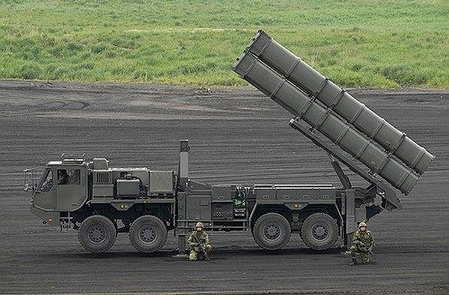
Japan’s Defence Ministry announced the deployment of long-range missiles with counterstrike capabilities at two Ground Self-Defense Force bases, triggering domestic opposition. The missiles are now operational at Camp Kengun in Kumamoto Prefecture and Camp Fuji in Shizuoka Prefecture, marking a departure from Japan’s historically defense-focused stance. Camp Kengun is now equipped with a ground-launched upgraded Type 12 land-to-ship guided missile, while Camp Fuji houses hyper velocity gliding projectiles designed for island defense.
The Type 12 missile at Camp Kengun can travel approximately 1,000 kilometers, surpassing Japan’s borders and signifying offensive potential. Similarly, the gliding projectiles at Camp Fuji, with a range of several hundred kilometers, are being upgraded to reach around 2,000 kilometers. This move towards “enemy base strike capability” allows Japan to launch counterstrikes preemptively, potentially raising concerns about international law violations.
Critics, including Atsushi Koketsu from Yamaguchi University, argue that these measures extend beyond self-defense, despite the government’s claims of enhancing deterrence. Protests have erupted in Kumamoto against the missile deployment, with residents fearing the area could become a military target. Calls for public briefings from the defence ministry have gone unanswered, fueling citizen dissatisfaction with the lack of transparency.
In Tokyo, citizen representatives have urged the government to halt military expansion, specifically targeting the missile deployment in Kumamoto. Officials have faced criticism for evading questions and lacking transparency, with concerns raised about Prime Minister Sanae Takaichi’s militarization agenda. The citizens demand greater accountability and vow to amplify their dissent through civic movements.
