


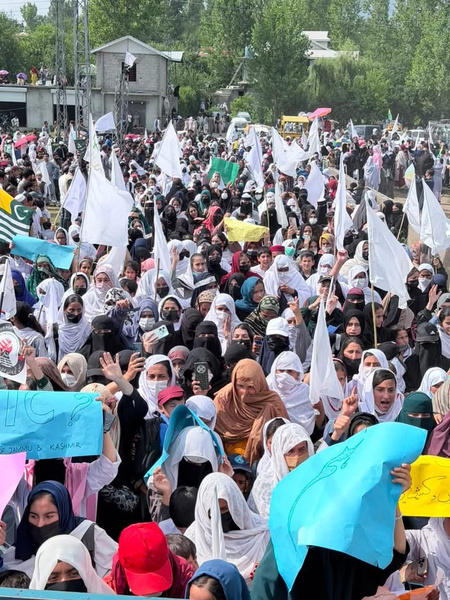
The Joint Awami Action Committee (JAAC) in Pakistan-occupied Kashmir (PoK) has decided to halt its long march until July 21, providing the Pakistani government with a final chance to address its demands. Initially set to march towards Muzaffarabad after the July 14 deadline, the JAAC postponed the protest following discussions with Pakistani authorities, including Army Chief Asim Munir and JAAC leaders like Umar Nazir Kashmiri. If no substantial steps are taken, the march is scheduled to resume on July 22, alongside ongoing sit-ins in PoK.
The recent clashes between local demonstrators and Pakistani forces in PoK have resulted in more than 30 casualties. The violent incidents, particularly near Rawalakot, led to numerous deaths and injuries, with seven JAAC activists losing their lives in a single event. Protesters have accused Pakistani authorities of implementing roadblocks, internet shutdowns, and disruptions in supplies to quell the movement.
Moreover, members of the Kashmiri diaspora have protested outside Pakistani diplomatic missions abroad, condemning alleged human rights violations in PoK and demanding international intervention against what they perceive as a severe crackdown by Pakistani authorities. In Islamabad, Army Chief Munir and Prime Minister Shehbaz Sharif faced criticism from Pakistan Peoples Party (PPP) Chairman Bilawal Bhutto Zardari over their handling of the situation in PoK, which he termed “very concerning.”
As tensions escalate into the sixth week, a significant gathering in Rawalakot saw JAAC leader Sardar Amman Khan labeling Pakistan’s control of the region as a forced occupation, rejecting Islamabad’s narrative on the disputed territory. The ongoing protests in PoK pose a direct challenge to Pakistan’s longstanding authority over the region, with accusations of a harsh crackdown on civilians, enforced curfews, and communication blackouts.
