


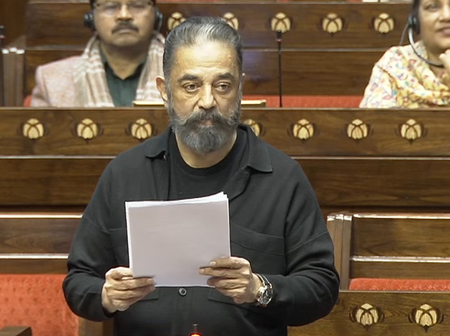
Veteran actor and MNM President Kamal Haasan gave his first speech in the Rajya Sabha during the ongoing Budget session’s discussion on the Motion of Thanks to the President’s address. Haasan, hailing from Paramakudi in Tamil Nadu, expressed gratitude to Tamil Nadu Chief Minister M.K. Stalin for his support and highlighted the influence of figures like Periyar, CN Annadurai, and Mahatma Gandhi on his language, thought, and politics.
Haasan reflected on his journey to Parliament through cinema, emphasizing how films propelled him into fame, acquainted him with Tamil history, and exposed him to the disparity between reality and the constitutional ideals of India as a united nation. He paid tribute to CN Annadurai for instilling in him the importance of defending Tamil language, culture, and rights against external influences.
In a poignant moment, Haasan underscored the importance of democracy, cautioning against the subjugation of people under the guise of democratic processes. He also stressed the impermanence of power, asserting that no government can achieve permanency and urging a focus on nurturing a progressive democracy for future generations.
Addressing the youth, Haasan called for a nurturing environment that fosters a growing and inclusive democracy, highlighting the significance of setting a positive example for the younger generation. His speech, delivered amidst intense debates on various issues including the India-US trade deal, garnered widespread appreciation from members across party lines, receiving enthusiastic applause.
Representing Tamil Nadu in the Rajya Sabha alongside DMK and other allies, Haasan’s presence adds a unique cinematic perspective to parliamentary discussions, advocating for federalism and the preservation of cultural heritage. As the floor leader of MNM, he emphasized the importance of upholding constitutional principles above majority rule, offering a fresh outlook on inclusivity during a session marked by Opposition protests and critiques.
MNM supporters streamed the speech online, celebrating it as a significant moment for unconventional politicians, marking a new chapter in the intersection of art and politics within the parliamentary arena.
