


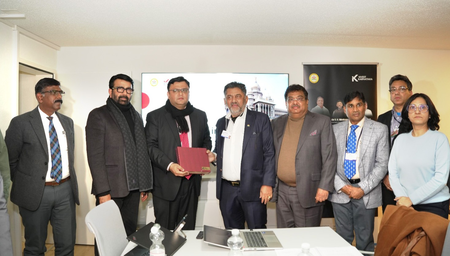
If anyone thought that convincing Karnataka Congress leader D.K. Shivakumar to attend the World Economic Forum in Davos would halt his Chief Ministerial ambitions, they were mistaken. The party’s central leadership is not expected to resolve the ongoing leadership clash between Chief Minister Siddaramaiah and Deputy CM Shivakumar easily. The power struggle has escalated, risking governance and credibility ahead of imminent state elections in West Bengal, Assam, Tamil Nadu, Kerala, and Puducherry.
The current crisis stems from a power-sharing expectation after Congress’s 2023 victory, with Shivakumar’s camp pushing for a change while Siddaramaiah insists on completing his term. Shivakumar’s canceled and rescheduled Davos trip, along with meetings in Delhi, has sparked speculation about his ambitions and the central leadership’s stance. The situation mirrors the power struggle in Rajasthan, where a similar indecision cost the Congress electorally.
Both septuagenarian leaders, Gehlot and Siddaramaiah, are being handled delicately due to their influence and support base. In contrast, younger leaders like Shivakumar and Pilot are eager for prominent roles. Karnataka’s internal strife has led to numerous exchanges, travels, and meetings without a resolution in sight. The delay in resolving the issue risks administrative paralysis and voter disillusionment, potentially impacting the party’s stability and electoral prospects.
The party’s delay in addressing the leadership crisis could allow opposition parties to capitalize on the situation, despite the ruling party’s current majority in the state Assembly. Congress President Mallikarjun Kharge has positioned himself as a mediator, awaiting the Gandhis’ consent. Reports suggest that his son’s future in Karnataka politics could be a factor in the ongoing deadlock.
