


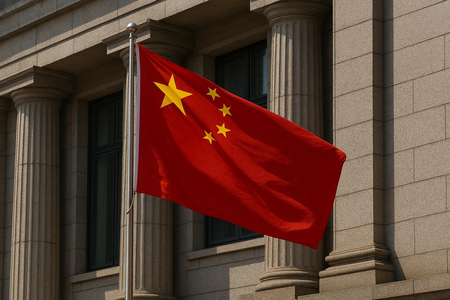
Kazakhstan has significantly increased its borrowing from China in recent years, accumulating a substantial debt that is expected to continue growing. The trend of aggressive borrowing began in 2025 when Kazakhstan secured over $3.5 billion in credit, raising its total debt to China to $12.87 billion. This marked a significant increase from the relatively stable debt levels of around $9 billion in previous years.
In a move to address its financial needs, Kazakhstan recently issued “panda bonds,” valued at over $500 million, within China’s domestic bond market. This issuance, with a maturity of three years and a 1.9 percent annual coupon rate, reflects the country’s ongoing reliance on Chinese credit. Kazakhstan’s sovereign credit rating of “AAA” with a “stable” outlook has further facilitated its access to favorable Chinese credit terms.
President Kassym-Jomart Tokayev unveiled an ambitious economic program aimed at developing a “cognitive economy” in Kazakhstan, with a significant portion of state borrowing earmarked for digital transformation initiatives. While China’s Luban workshops in Kazakhstan aim to enhance vocational training, recent strains in Kazakh-Chinese relations have emerged, notably with the arrest of Chinese nationals at a metallurgical plant in Shymkent.
Authorities in Kazakhstan have launched an investigation into the incident, which led to the arrest of approximately 80 Chinese workers, including investors planning a $30 million investment in the plant’s expansion. The plant’s operations were disrupted due to the arrests, resulting in significant financial losses. These developments underscore the complex dynamics in Kazakh-Chinese relations, amidst ongoing economic cooperation and occasional challenges.
