


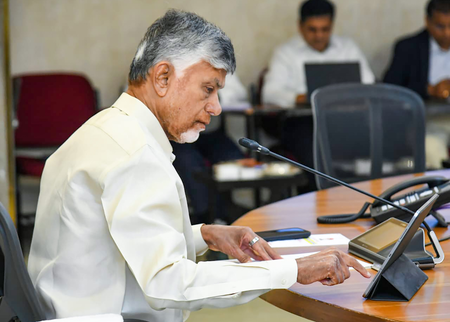
A political dispute has arisen between the Kerala Congress and Andhra Pradesh Chief Minister N. Chandrababu Naidu regarding the Women’s Reservation Bill. The Congress’ Kerala unit responded strongly to Naidu’s accusations, claiming that the bill had already been unanimously passed in 2023 with the support of all parties, contradicting Naidu’s allegations of obstruction.
Naidu, in his initial social media post, criticized the Congress and its allies for hindering what he called a significant step towards women’s empowerment. He labeled it as political obstruction and a betrayal of millions of deserving women who should have equal representation in Parliament.
The Congress rebuttal shifted the focus to the contentious issue of delimitation, stating that they had defeated the delimitation Bill for the future of the Indian Union. This reference is part of a broader Opposition concern that delimitation based on population could disproportionately impact southern states like Andhra Pradesh, Telangana, and Kerala by reducing their political representation.
The exchange highlights the escalating tensions before crucial political confrontations, with women’s reservation and delimitation emerging as interconnected points of contention. The Women’s Reservation Bill, touted as a significant reform for enhancing female representation, is intricately linked to future census and delimitation exercises, adding layers of political complexity.
Naidu’s statements, echoing the ruling alliance’s stance, seem aimed at rallying support around the women’s quota issue. Meanwhile, the Congress is striving to elevate the discussion on federal balance and regional fairness. Both sides, by invoking themes of betrayal and representation, are fueling a national debate that extends beyond gender equality to the fundamental structure of political power-sharing in India.
