


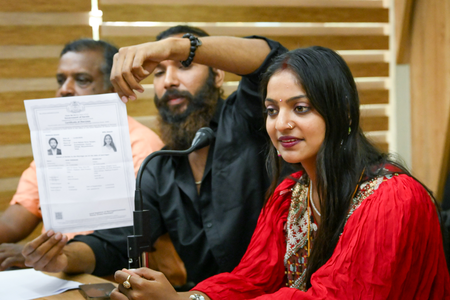
A significant confrontation is anticipated as Kerala’s Director General of Police, Ravada Chandrasekhar, defends the legality of the marriage of the viral ‘Kumbh Mela girl’ before the National Commission for Scheduled Castes and Scheduled Tribes in New Delhi. Kerala Police assert that the marriage, which took place on March 11 in Thiruvananthapuram, is legally valid and that the girl was of legal age at the time.
Chandrasekhar is prepared to present documentary evidence countering claims by Madhya Pradesh Police and the girl’s family that she is a minor. Kerala authorities maintain that the age-proof records submitted were verified as genuine before granting permission for the marriage, leading to a direct clash between the policing systems of the two states.
The case has escalated with Madhya Pradesh invoking charges under the POCSO Act and alleging abduction, while Kerala plans to argue against these charges, citing an adult’s right to choose a partner as upheld by the Supreme Court. Kerala Police will inform the Commission that the girl is not missing but is under discreet police observation in Kerala, ensuring her safety and protection if needed.
The girl’s husband has revealed that she is pregnant, making long-distance travel risky, and Kerala may request her statement to be recorded via video conferencing if necessary. A key issue revolves around the authenticity of age-related documents, particularly a birth certificate that initially indicated she was over 18 at the time of marriage but was later canceled, raising doubts over procedural consistency.
Kerala has stood firm on not surrendering the girl, emphasizing its duty to safeguard her personal freedom. The outcome of the Commission’s decision is expected to have national implications, testing the boundaries of jurisdiction, legality, and individual rights.
