


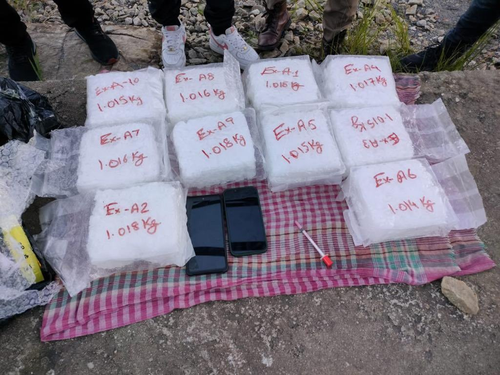
Kerala is grappling with a significant drug problem, emerging as a key transit and entry point alongside a growing consumer market. Recent scrutiny has extended to suppliers, carriers, and even consumers, with upscale hotel parties now under increased surveillance. Notably, there has been a shift in drug preferences, with marijuana demand decreasing while heroin, MDMA, and ecstasy gaining traction.
Authorities have observed diverse tactics employed by drug smugglers in Kerala, with a focus on migrant workers serving as primary carriers. These workers, often coerced by promises of money, face threats if they resist drug distribution, leading to a surge in bookings of such individuals. Investigations reveal a pattern where migrant workers from Assam and other northeastern states are caught supplying heroin in Kerala.
The transition from ganja to heroin is attributed to the latter’s higher demand and lower detectability. A concerning modus operandi involves migrants abandoning heroin bags at railway stations for later retrieval, indicating a sophisticated network at play. Law enforcement agencies are intensifying efforts not only against suppliers and distributors but also monitoring consumers closely, especially high-profile personalities involved in supplying drugs like MDMA and ecstasy.
The police probe has uncovered large-scale drug transactions occurring at prestigious venues hosting parties, where ecstasy pills and MDMA are in high demand. The role of these venues in facilitating drug-related events is being scrutinized, with a focus on inter-state connections. Investigations have revealed drug inflows from Karnataka and Delhi into Kochi, prompting a crackdown on such networks following recent raids at luxury hotels.
Kerala’s extensive coastline, spanning over 590 kilometers, has attracted narcotic cartels from the Golden Crescent and Golden Triangle regions, further complicating the drug scenario. The surge in consumer demand, coupled with cross-border drug trafficking, poses a multifaceted challenge for law enforcement agencies in the state.
