


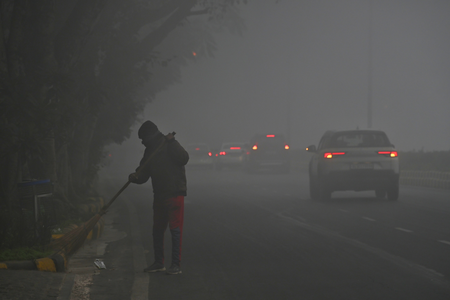
A day after Kolkata Mayor Firhad Hakim’s directive to enhance efforts in controlling air pollution, environmentalists expressed concerns, deeming the measures insufficient. The city has long struggled with high pollution levels, with inadequate enforcement of existing measures. Mayor Hakim led a meeting attended by various officials, emphasizing actions like curbing fires, controlling emissions, and managing construction waste.
At the meeting, Hakim urged police and traffic departments to address issues like burning dry leaves, fencing construction sites, and sprinkling water in dust-prone areas. Measures were discussed to manage dust during construction near Victoria Memorial and to curb dumping of waste on roads. The Mayor stressed the need for departmental coordination in waste removal and instructed watering of construction areas for 16 hours daily.
Environmentalists highlighted the urgency of implementing the Graded Response Action Plan (GRAP) for Kolkata’s poor Air Quality Index (AQI). Diesel emissions, waste burning, and construction dust were identified as major contributors to rising pollution levels. They emphasized the need for stricter pollution control measures and GRAP implementation.
Notably, concerns were raised about pollution sources like uncovered construction materials, coal-fired eateries, and old diesel vehicles. Ghosh emphasized the necessity of a denser network of monitoring stations and pollution control to combat the city’s severe AQI levels. Additionally, issues like open garbage vats near water bodies and fuel quality in roadside stalls were flagged as contributors to environmental pollution.
The Calcutta High Court has taken suo motu cognizance of the escalating pollution in West Bengal, particularly in Kolkata. A public interest litigation has been initiated, with a hearing scheduled for January 28. Parties involved in related PILs have been summoned for the hearing to address the pressing pollution concerns.
