


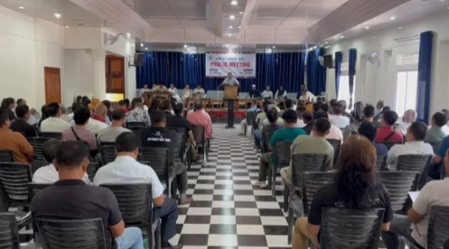
A significant meeting involving Kuki-Zo community MLAs, Kuki-Zo Council (KZC) leaders, and Kuki-Zo armed groups under Suspension of Operations (SoO) was convened in Guwahati. The gathering emphasized the need for the Central government to address their political demands before the upcoming Manipur Assembly elections in 2027. Since ethnic unrest erupted in Manipur in May 2023, various Kuki-Zo tribal organizations, including the KZC, ten community MLAs, and militants under the SoO agreement, have been advocating for a separate administration akin to a Union Territory with a legislative assembly.
A joint press release issued after the meeting in Guwahati highlighted that the three groups assessed Manipur’s current political landscape and the existing conditions in the state. Noting the enduring de facto demographic and administrative segregation over the past 32 months, the meeting collectively endorsed five resolutions. These resolutions include a call for the resolution of the Kuki-Zo communities’ political issues before the 2027 Assembly elections.
The meeting also decided that Kuki-Zo MLAs would abstain from participating in the formation of any new state government. Additionally, they emphasized that any commitments made by the Central government should be promptly fulfilled, particularly within the current Assembly’s term. Last week, the KZC and the Indigenous Tribal Leaders Forum (ITLF) reiterated that the ten Kuki-Zo tribal community MLAs would not engage in the establishment of a new state government under any circumstances.
Out of the ten Kuki-Zo legislators, seven are affiliated with the BJP, while the remaining three represent other regional parties. Despite this, the Central government, BJP, and various Meitei community organizations have consistently opposed the demand for a separate administration or a Union Territory with a legislature. Simultaneously, officials from the Union Home Ministry have conducted multiple rounds of individual meetings with SoO militants, the KZC, various Kuki-Zo civil society groups, MLAs, and non-governmental organizations to address their grievances.
