


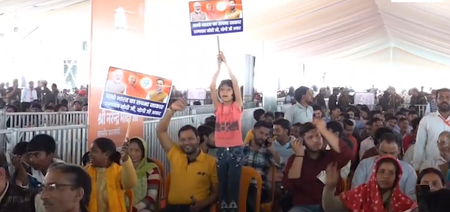
A significant number of individuals congregated in Meerut on Sunday in anticipation of Prime Minister Narendra Modi’s upcoming public rally. The Prime Minister is scheduled to unveil and dedicate development initiatives valued at approximately ₹12,930 crore for the nation. Enthusiastic supporters, local residents, and party workers arrived early at the venue, expressing excitement over projects like the Namo Bharat rapid rail and Meerut Metro, which are poised to enhance regional connectivity.
The launch of these projects is seen as a substantial boon for the region, with one attendee describing it as a “big gift” that will not only benefit Meerut but also neighboring districts like Shamli, Muzaffarnagar, and parts of Uttarakhand including Haridwar. The improved connectivity is expected to bridge the gap between Meerut and Delhi, facilitating faster daily commutes.
A worker from the RLD present at the event hailed the development as “historic,” highlighting the relief it would bring from severe traffic congestion on routes connecting Meerut to the national capital. The worker expressed gratitude towards the Prime Minister, emphasizing that the new infrastructure would significantly reduce travel time between Meerut and Delhi.
Prime Minister Modi is set to kick off the Meerut Metro and the Namo Bharat train from the Shatabdi Nagar Namo Bharat Station, followed by the inauguration of the entire 82-km Delhi–Meerut Namo Bharat Corridor. This corridor, including key sections like the stretch between Sarai Kale Khan and New Ashok Nagar in Delhi, is anticipated to alleviate road congestion, enhance economic growth, and reduce travel time across the National Capital Region and adjacent areas.
The Delhi-Ghaziabad-Meerut Namo Bharat corridor, spanning 82.15 km, marks India’s inaugural Regional Rapid Transit System (RRTS), connecting Sarai Kale Khan in Delhi to Modipuram in Uttar Pradesh. The Meerut Metro, covering a 23-km stretch within the city, will operate alongside the Namo Bharat rapid rail, streamlining train commutes for passengers who can seamlessly switch between the two services within station premises.
