


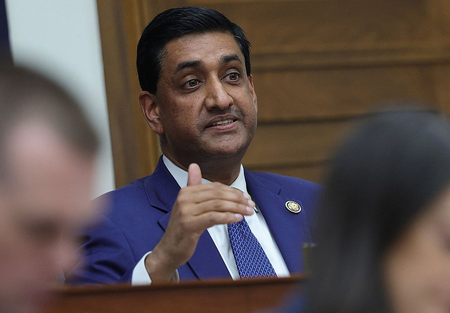
Two bipartisan lawmakers, including Indian American Congressman Ro Khanna and Representative Rich McCormick, have presented a new bill to evaluate America’s biotechnology workforce. The Federal Biotechnology Workforce Assessment Act aims to determine if the US has enough skilled workers to support the rapidly expanding biotechnology industry. This legislation tasks the Office of Personnel Management and Budget with collaborating with federal agencies to define the biotechnology workforce and analyze the current and future staffing needs for bio-literate employees across the government.
The proposed assessment report, once completed, will be shared with Congress to influence future hiring and workforce development strategies related to biotechnology, artificial intelligence, and advanced manufacturing. Concerns have been raised in Washington about the US potentially falling behind China in critical sectors such as biotechnology, AI, and quantum technologies. The lawmakers’ initiative follows a 2025 assessment by the National Security Commission on Emerging Biotechnology, emphasizing the importance of a well-trained biotechnology workforce for American leadership in emerging technologies.
This bill is part of a larger legislative package that includes McCormick’s Biotechnology Workforce Alignment Act. Together, these measures aim to identify workforce gaps and align federal research priorities with industry requirements. Congressman Khanna highlighted the significance of investing in America’s federal biotechnology workforce to secure economic and scientific leadership in the 21st century. He expressed pride in leading the Federal Biotechnology Workforce Assessment Act alongside Representative Rich McCormick to assess America’s readiness to compete with China in biotechnology advancements.
Representative McCormick positioned the legislation as both an economic and national security imperative, emphasizing the need to maintain America’s global leadership in biotechnology. He stressed the importance of developing a coordinated strategy to address workforce needs aligned with industry demands. By assessing gaps and aligning research priorities with workforce development, the US can ensure its competitive edge and leadership in future industries. The lawmakers also highlighted that the biotechnology workforce encompasses a wide range of roles beyond laboratory scientists and researchers.
NSCEB Commissioner Paul Arcangeli described the biotechnology workforce as a crucial national security asset. He emphasized the significance of these bills in ensuring that the US remains at the forefront of scientific innovation, AI-driven discoveries, and advanced biomanufacturing. Arcangeli underscored the need for a diverse pipeline that includes not only life scientists and researchers but also industrial technicians, mechanics, pipefitters, and other skilled workers essential for driving the future biotechnology economy.
