


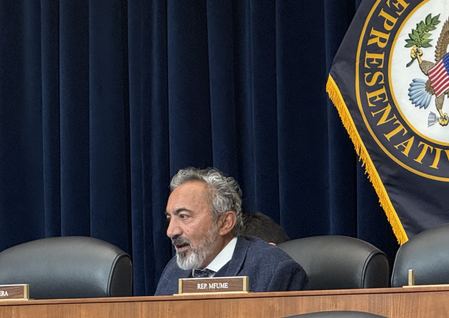
Lawmakers in the US are advocating for the repeal of the Jackson-Vanik amendment, a Cold War-era trade restriction affecting Central Asian nations. They argue that this outdated provision impedes US investment opportunities and undermines strategic competition with Russia and China. During a House subcommittee hearing on South and Central Asia, Democratic Rep. Ami Bera emphasized the need to remove this trade barrier to facilitate greater investment by US companies in Central Asian countries.
The bipartisan nature of the issue was underscored, with both parties acknowledging the irrelevance of the Jackson-Vanik amendment in the current geopolitical landscape. Lawmakers highlighted the strategic importance of encouraging US companies to invest in critical minerals and energy resources in Central Asia, situated between Russia and China. Assistant Secretary of State for South and Central Asian Affairs Paul Kapur echoed the bipartisan sentiment, emphasizing the need to address this outdated Cold War relic swiftly.
The discussion emphasized the increasing congressional interest in enhancing US economic involvement in Central Asia, a region now seen through the lens of strategic competition. Central Asian nations, known for their wealth in critical minerals and energy resources, are seeking to diversify their trade and investment partnerships. By eliminating trade-era restrictions like the Jackson-Vanik amendment, policymakers believe the US can increase private-sector engagement and provide alternatives to Chinese and Russian influence in the region.
Lawmakers stressed the importance of swift action in repealing the Jackson-Vanik amendment to unlock greater economic opportunities in Central Asia. The amendment, enacted in 1974 to address freedom-of-emigration requirements in Soviet-bloc countries, is now seen as a hindrance to deeper economic engagement in a region of growing geopolitical significance. The bipartisan support for removing this outdated provision contrasts with other contentious issues discussed during the hearing, such as Afghanistan and Indo-Pacific priorities.
