


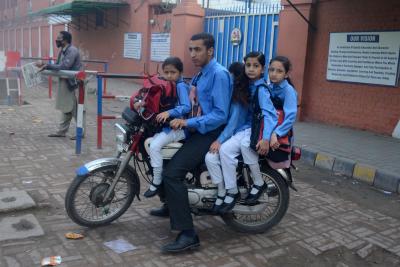
The learning crisis in Pakistan worsens as children, already struggling with basic literacy, face continuous school closures. Prime Minister Shehbaz Sharif recently shifted schools to online classes for two weeks due to fuel price hikes from the West Asia conflict, adding to a series of shutdowns for various reasons. This recurring pattern, as highlighted by development practitioner Mehrin Shah, exacerbates the education system’s challenges.
Shah emphasized the impact of persistent closures on a country where 77% of 10-year-olds struggle to read and understand simple texts. With schools shut for 97 days in 2023-24 due to climate crises, learning disruptions have become a norm, affecting over 26 million students during the initial Covid-19 wave. Particularly alarming is the significant dropout rate, especially among girls, with adverse effects on gender equality and safety.
Apart from academic setbacks, school closures disproportionately affect girls, jeopardizing their protection from child marriage and labor. The absence of schools as safe havens heightens risks for vulnerable students, emphasizing the broader societal implications of shutdowns. While remote learning is proposed as an alternative, challenges such as limited access to technology and language barriers hinder its effectiveness, widening educational disparities.
Mehrin Shah underscored the strain on an already fragile education system, urging robust support to safeguard student learning during closures. The necessity of maintaining educational continuity, especially for marginalized communities, underscores the critical need for sustainable solutions to mitigate the widening learning gaps in Pakistan.
